10 Screen-Free Activities for Kids at Home
10 Screen-Free Activities for Kids at Home
Category: Activities
Author: Toyly World
Reading Time: 5 min
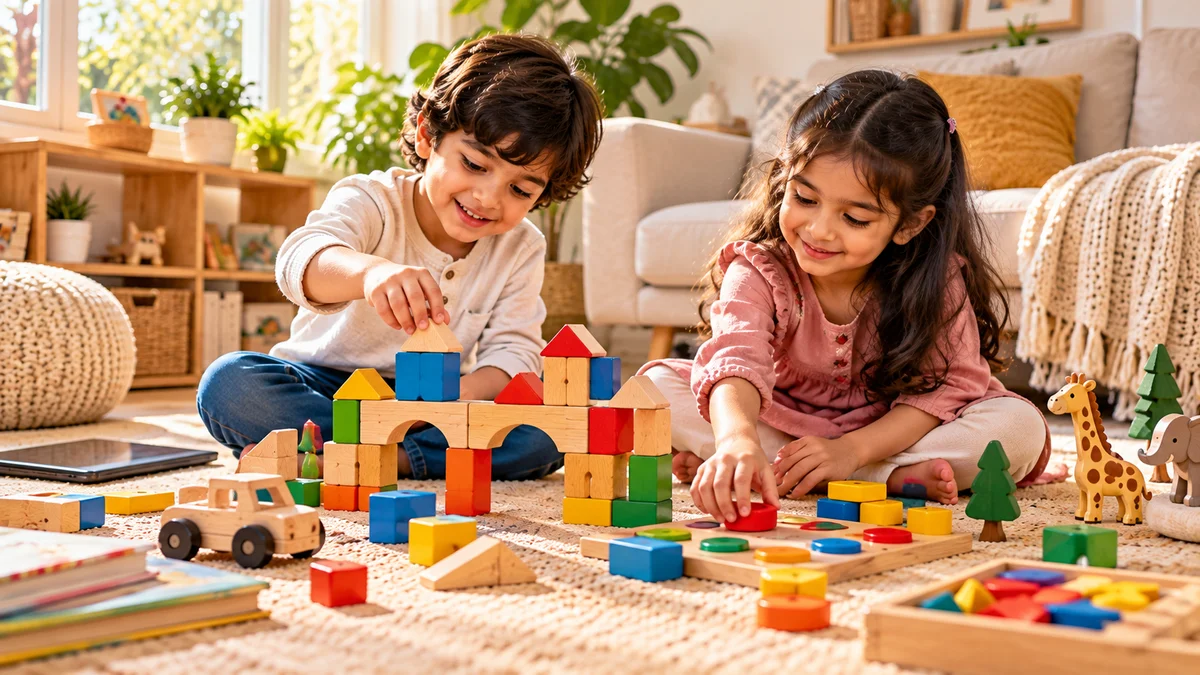
Children don't need screens to stay entertained. With a few simple toys and everyday materials, home can become a place for building, creating, imagining and discovering.
Screen-free activities can give children opportunities to move, think, communicate and use their imagination while enjoying quality playtime.
Here are 10 simple screen-free activities for kids at home.
1. Build a Tall Tower
Give your child a set of wooden blocks and challenge them to build the tallest tower they can.
Let them experiment with different sizes and arrangements.
Ask questions such as:
How tall can you make it?
Which blocks should go at the bottom?
Can you make it stable?
What happens if you change the shape?
This simple activity encourages problem-solving, balance and creativity.
2. Create a Toy City
Use wooden blocks, toy vehicles and other toys to create a small city.
Children can build:
Houses
Roads
Bridges
Shops
Parking areas
Parks
Once the city is ready, encourage your child to create stories around it.
A simple collection of toys can become an entire imaginary world.
3. Play a Color-Sorting Game
Collect colorful toys or blocks and ask your child to sort them by color.
Start with two or three colors and gradually add more.
You can turn it into a challenge:
"Can you find all the red pieces?"
"Which color has the most blocks?"
This activity can encourage observation, color recognition and early classification skills.
4. Have a Puzzle Challenge
Choose an age-appropriate puzzle and let your child work through it independently.
You can make it more interesting by setting a playful challenge rather than focusing only on finishing quickly.
Ask:
"Which piece do you think goes here?"
"What shape are you looking for?"
Puzzles encourage children to observe details, compare pieces and think about how different parts fit together.
5. Create an Indoor Treasure Hunt
Hide a few toys around a safe area of your home and create simple clues.
For example:
"Find something near the bookshelf."
"Look for a toy that has wheels."
"Find something blue."
Treasure hunts encourage movement, observation, memory and problem-solving.
6. Make a Pretend-Play Adventure
Choose a few favorite toys and create a story together.
A wooden vehicle could become a rescue car.
Animal toys could become characters in a jungle adventure.
Blocks could become a castle.
Let your child decide what happens next.
Pretend play encourages imagination, communication and storytelling.
7. Build a Simple Obstacle Course
Use cushions, soft toys, cardboard boxes and other safe household objects to create a simple indoor obstacle course.
Children can:
Walk around objects
Crawl through a safe space
Step over cushions
Carry a toy from one point to another
Keep the activity age-appropriate and supervise children during physical play.
8. Try a Memory Game
Place several familiar toys on the floor.
Let your child look at them for a few moments, then cover or remove one item.
Ask:
"What's missing?"
Start with just a few objects and increase the number as the game becomes easier.
This can encourage observation, memory and concentration.
9. Create Something With Blocks
Instead of giving children a specific building to copy, give them a creative challenge.
Ask:
"Can you build a house?"
"Can you make a bridge?"
"Can you build something that can hold a toy car?"
There isn't necessarily one correct answer.
This type of open-ended activity allows children to experiment and develop their own ideas.
10. Read a Story and Build It
Choose a favorite children's story and turn it into a play activity.
If the story has a house, build one with blocks.
If it has a vehicle, bring out a toy car.
If it has animals, use animal figures to recreate the characters.
This combines reading, imagination and hands-on play in one activity.
Why Screen-Free Play Matters
Screen-free play gives children time to interact with their surroundings and use their own imagination.
Building, sorting, creating, moving and pretending can encourage children to develop skills such as:
Creativity
Problem-solving
Communication
Fine motor skills
Concentration
Memory
Spatial awareness
Imagination
The goal isn't to keep children busy every minute. It's to give them opportunities to explore and discover at their own pace.
You Don't Need Many Toys
A large collection of toys isn't necessary for meaningful play.
A few wooden blocks can become a tower, house or bridge.
A wooden vehicle can become part of an adventure.
A puzzle can become a problem-solving challenge.
A group of colorful pieces can become a sorting game.
The possibilities often come from the child's imagination rather than the number of toys available.
Final Thoughts
Screen-free play can be simple, creative and enjoyable.
With a few toys and everyday objects, parents can create activities that encourage children to build, explore, imagine and learn without relying on screens.
At Toyly World, we believe that some of the best childhood moments begin with simple toys and a little imagination.
Put the screen away. Pick up a toy. Let the adventure begin.
Explore Toyly World
Discover thoughtfully designed toys that turn everyday playtime into opportunities for creativity, exploration and learning.
Shop Toyly World →