Why Wooden Toys Are Great for Learning Through Play
Why Wooden Toys Are Great for Learning Through Play
Category: Wooden Toys
Reading Time: 5 min
Author: Toyly World
Children learn naturally through play. When they build, stack, sort, balance, imagine and experiment, they are developing skills while having fun. Wooden toys are especially suited to this kind of hands-on learning because they encourage children to interact, explore and create rather than simply press buttons or watch something happen.
At Toyly World, we believe play and learning should go hand in hand. Here are some of the ways wooden toys can make everyday play more meaningful.
1. Wooden Toys Encourage Hands-On Learning
Children learn by touching, moving and experimenting with objects around them.
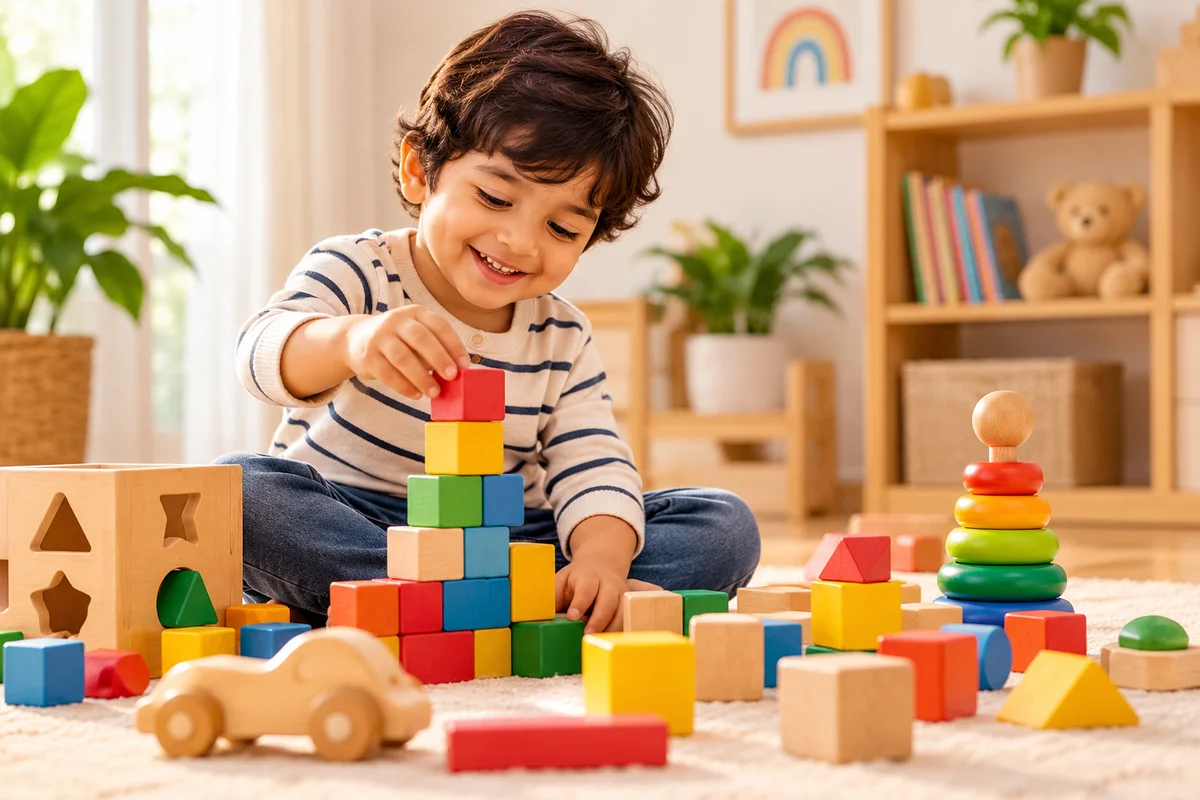
A set of wooden blocks, for example, gives children the freedom to build towers, bridges, houses and anything else they can imagine. They can move pieces around, test different arrangements and discover what works.
This type of hands-on play encourages children to learn through their own actions.
2. They Help Develop Problem-Solving Skills
Many wooden toys don't have just one way to play.
A child building a tower has to think about questions such as:
Which block should go at the bottom?
How can I make the tower stable?
What happens if I move this piece?
How high can I build it?
These simple decisions encourage children to experiment, observe results and try again.
The process of trying, adjusting and trying again is an important part of learning.
3. Wooden Toys Encourage Creativity
Open-ended toys give children the freedom to decide how they want to play.
A wooden block can become a house, a bridge, a tower, a garage or something completely different. There is no single correct answer.
This freedom allows children to create their own games and stories while developing their imagination.
4. They Support Fine Motor Skills
Picking up, placing, stacking and arranging small toy pieces requires controlled hand movements.
Activities such as:
Stacking blocks
Building structures
Sorting pieces
Completing puzzles
Moving small toy vehicles
can give children opportunities to practice hand-eye coordination and fine motor control through play.
5. They Introduce Early Concepts Naturally
Learning doesn't always need to happen through worksheets or structured lessons.
Children can discover basic concepts while playing.
For example, stacking and sorting toys can introduce ideas such as:
Colors — identifying and matching different colors.
Shapes — recognizing and arranging different shapes.
Numbers — counting pieces while building.
Balance — understanding why some structures stand while others fall.
Size — comparing bigger and smaller objects.
Play turns these basic concepts into something children can physically explore.
6. They Encourage Independent Play
Open-ended wooden toys allow children to decide what they want to build or create.
This can encourage independent exploration and give children opportunities to make their own choices during play.
Instead of following one fixed set of instructions, children can experiment with different possibilities and develop their own ways of playing.
7. Wooden Toys Can Encourage Social Play
Wooden toys can also become a great way for children and parents, siblings or friends to play together.
Building a tower, creating a pretend-play world or solving a puzzle together can encourage children to:
Take turns
Share toys
Communicate ideas
Work together
Celebrate their creations
These moments can make learning a shared experience.
8. Simple Toys Can Create Big Ideas
One of the biggest advantages of open-ended play is that a simple toy can become many different things.
A few wooden blocks might become a city.
A wooden vehicle might become part of an imaginary adventure.
A stacking toy might become a challenge to build the tallest structure.
The toy provides the starting point, while the child's imagination determines what happens next.
Choosing Wooden Toys for Your Child
When choosing wooden toys, look for options that encourage children to build, create, explore and experiment.
Consider toys that:
Match the child's age and abilities
Encourage hands-on interaction
Offer different ways to play
Are easy for children to understand and use
Encourage creativity and problem-solving
Are made with child-friendly materials and construction
The best toy doesn't necessarily need to be complicated. Sometimes, a simple toy that gives a child the freedom to explore can create the most interesting play experiences.
Final Thoughts
Wooden toys can make play a meaningful part of childhood learning. Through stacking, building, sorting, balancing and imaginative play, children get opportunities to practice different skills while simply enjoying themselves.
At Toyly World, our goal is to make playtime more engaging, creative and meaningful with thoughtfully designed toys for curious little minds.
Because when children play, they discover. When they discover, they learn.
Explore Toyly World
Discover colorful, engaging toys designed to bring more play, more creativity and more learning into everyday childhood.
Shop Toyly World →