7 Fun Ways to Make Learning Feel Like Play
7 Fun Ways to Make Learning Feel Like Play
Category: Learning Through Play
Author: Toyly World
Reading Time: 5 min
Children are naturally curious. They want to touch, build, move, ask questions and discover how things work. This makes play one of the simplest ways to introduce new skills and concepts into everyday life.
Learning does not always need to feel like a lesson. With the right activities, children can practice counting, colors, shapes, coordination, creativity and problem-solving while simply having fun.
Here are 7 easy ways to make learning feel like play.
1. Turn Counting Into a Game
Counting can become much more enjoyable when children can physically interact with objects.
Give your child a collection of wooden blocks, toy vehicles or other safe toys and ask them to count how many they have.
You can make it more engaging with simple challenges:
How many red blocks can you find?
Can you count five cars?
Can you make a tower with ten blocks?
Which group has more pieces?
These small games introduce early number concepts without making the activity feel like a formal lesson.
2. Make Colors Part of Everyday Play
Color recognition can be practiced almost anywhere.
During playtime, ask children to find toys of different colors and group them together.
For example:
Red: Find all the red toys.
Blue: Can you find three blue pieces?
Green: Can you build something using only green blocks?
Sorting colors can also encourage observation and classification skills while keeping children actively involved.
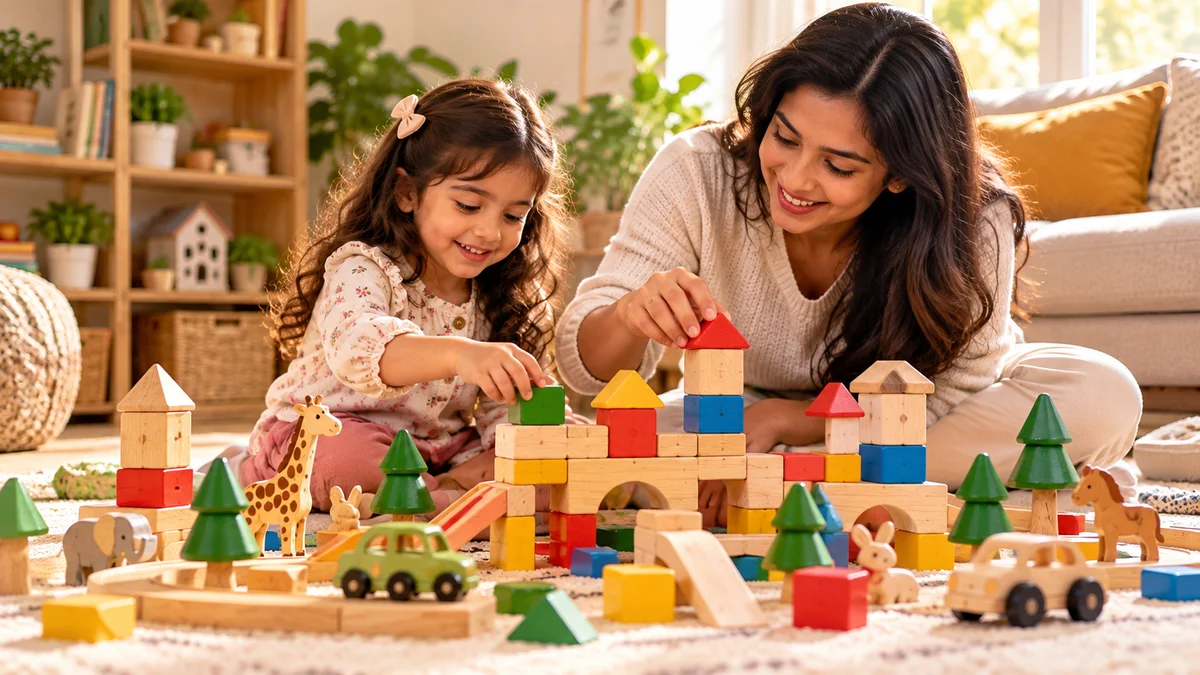
3. Learn Shapes Through Building
Building toys are a simple way to introduce basic shapes.
Give children different wooden pieces and encourage them to identify circles, squares, rectangles, triangles and other shapes.
Then turn it into a creative challenge:
"Can you build a house using these shapes?"
Children can explore how different shapes fit together while developing spatial awareness and creative thinking.
4. Create a Toy Treasure Hunt
A treasure hunt can turn learning into an adventure.
Hide a few toys around a safe play area and give your child simple clues.
For example:
"Find something that is blue."
"Look for a toy with wheels."
"Find something shaped like a circle."
"Can you find three animals?"
This type of activity encourages children to listen, observe, remember information and solve simple challenges.
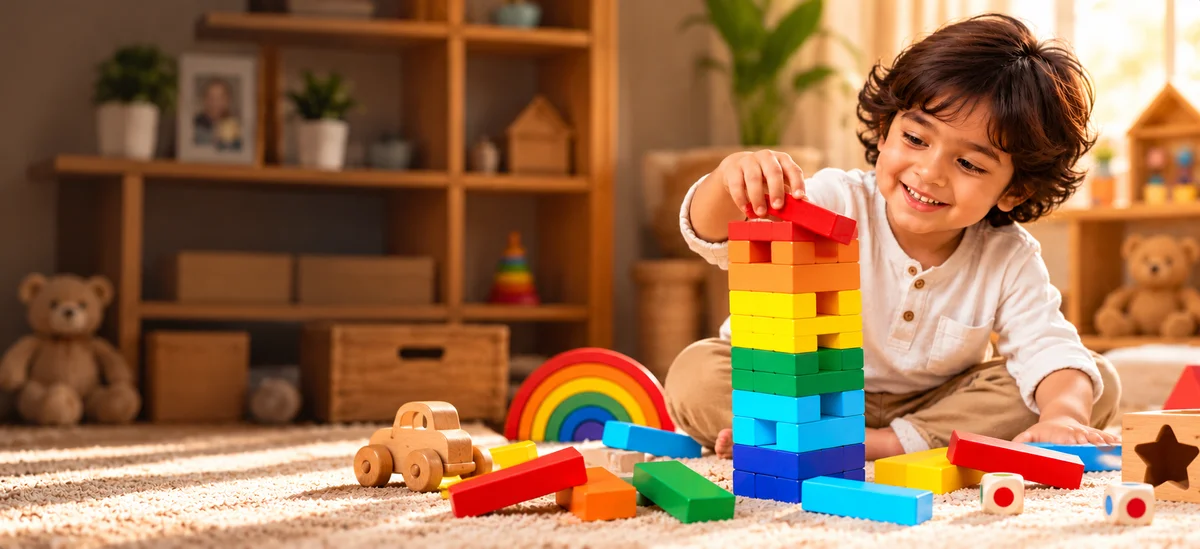
5. Build, Knock Down and Build Again
Building activities are excellent opportunities for experimentation.
Give your child wooden blocks or stacking toys and let them build a tower.
Then introduce small challenges:
Can you make it taller?
Can you make it stronger?
Can you build a bridge?
What happens if you move one block?
Can you rebuild it differently?
When a tower falls, children get another opportunity to experiment and try a different approach.
The goal isn't always to build something perfectly. The process of trying, changing and trying again is part of learning.
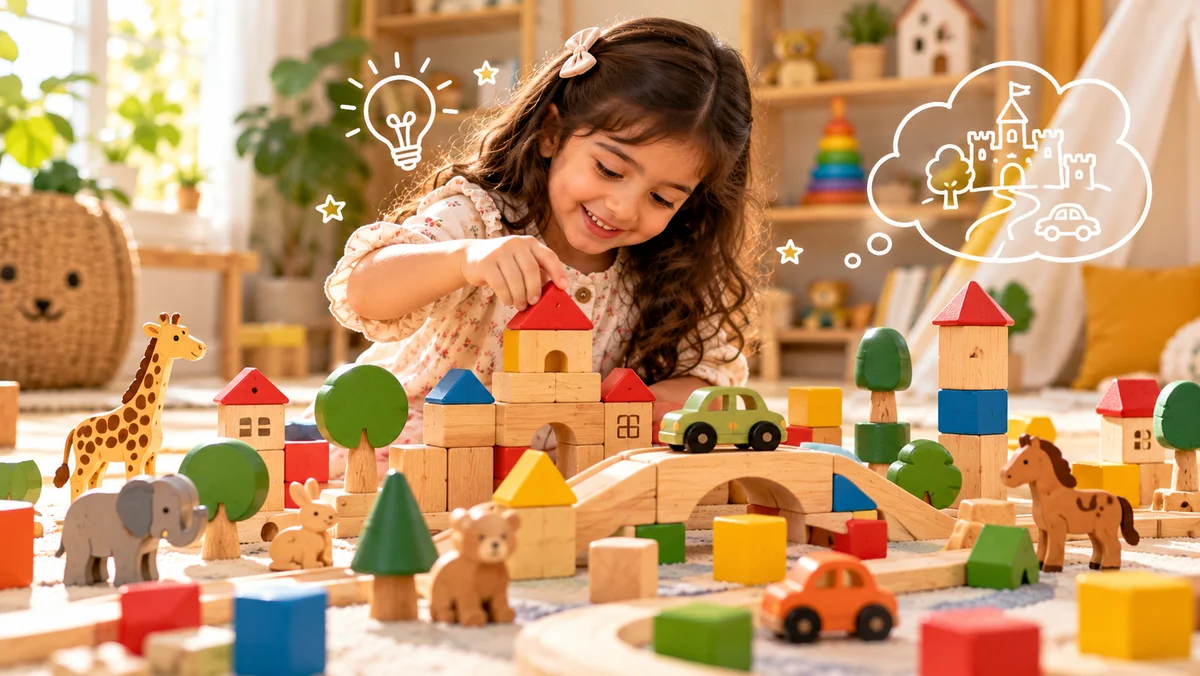
6. Turn Pretend Play Into Storytelling
Children can learn through imagination too.
Use wooden vehicles, animal toys, blocks or other play pieces to create a simple story.
For example:
"The little wooden car is going on a trip. Where should it go?"
Your child can decide where the car travels, who it meets and what happens next.
This can encourage:
Imagination
Vocabulary
Communication
Storytelling
Creative thinking
There is no need for a complicated setup. A few toys can be enough to create an entire imaginary world.
7. Make Everyday Challenges Into Games
Some of the best learning opportunities can come from simple challenges.
Instead of telling a child exactly what to do, ask questions that encourage them to think.
Try questions like:
"How can we make this tower taller?"
"Which piece will fit here?"
"What should we build next?"
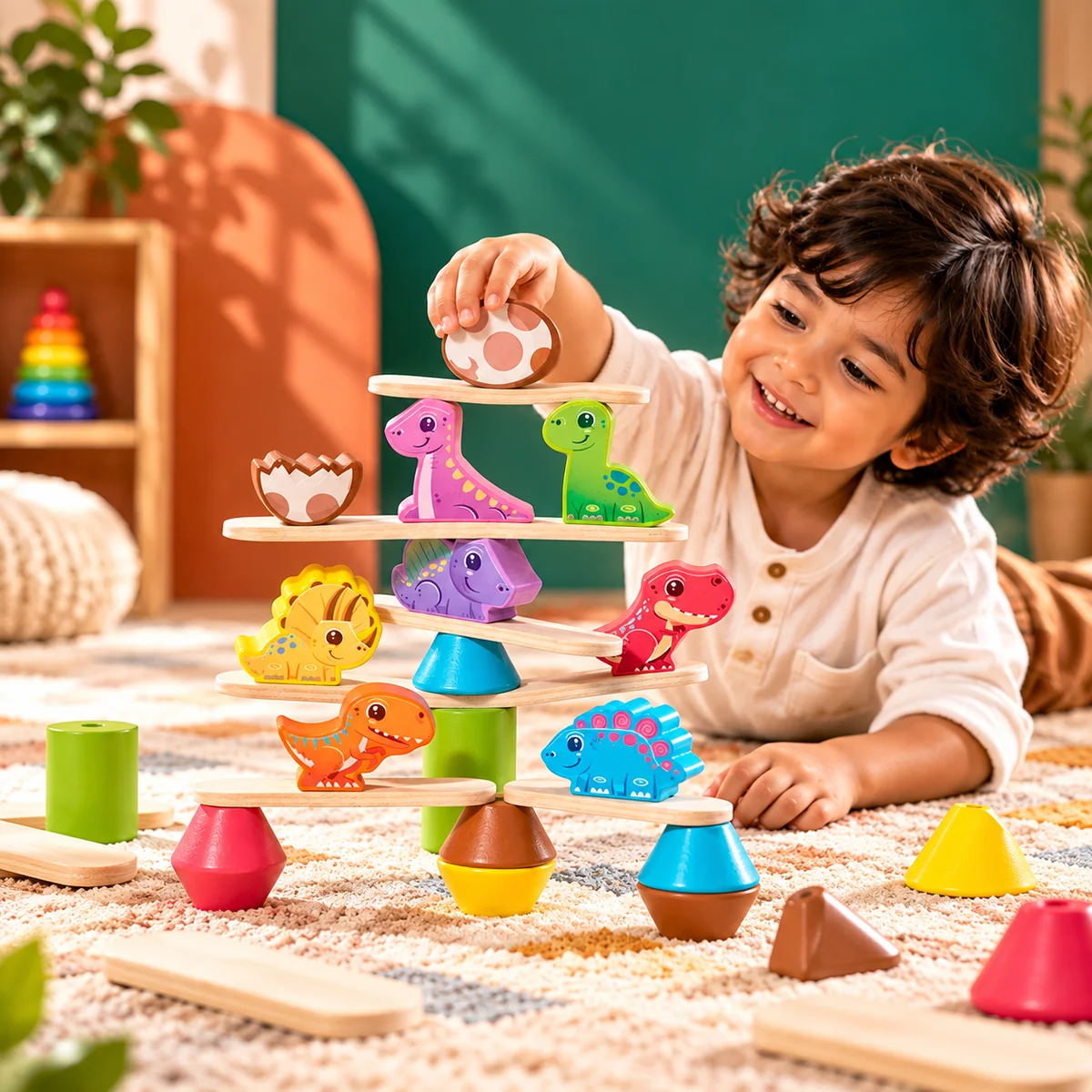
"Can you find a way to balance these pieces?"
These questions encourage children to explore possible solutions rather than simply follow instructions.
Why Learning Through Play Works
Play gives children an opportunity to learn by doing.
When children build, sort, count, balance and create, they are actively interacting with the world around them.
They can make mistakes, change their ideas and try again without the pressure of getting a perfect answer.
That makes play a natural environment for developing skills such as:
Problem-solving
Creativity
Fine motor coordination
Communication
Observation
Early mathematical thinking
Spatial awareness
Imagination
Keep Learning Simple and Fun
Learning through play does not require expensive equipment or complicated activities.
A few wooden blocks can become a building challenge.
A set of colorful toys can become a sorting game.
A wooden vehicle can become the beginning of an imaginary adventure.
The most important part is giving children opportunities to explore and allowing them to participate actively.
Let them choose. Let them experiment. Let them make mistakes. Let them try again.
Final Thoughts
Learning can happen naturally when children are given the freedom to play, explore and discover.
By turning everyday activities into simple games, parents can create opportunities for children to practice important skills without making playtime feel like school.
At Toyly World, we believe that toys should encourage children to play more, explore more and discover more.
Because when learning feels like play, children are free to enjoy the journey of discovery.
Explore Toyly World
Discover thoughtfully designed toys that bring creativity, curiosity and hands-on learning into everyday play.
Shop Toyly World →