Why Open-Ended Toys Are Important for Childhood Development
Why Open-Ended Toys Are Important for Childhood Development
Category: Learning Through Play
Author: Toyly World
Reading Time: 5 min
Children don't always need toys that tell them exactly what to do. Sometimes, the best play begins when a child is given a simple toy and the freedom to decide what happens next.
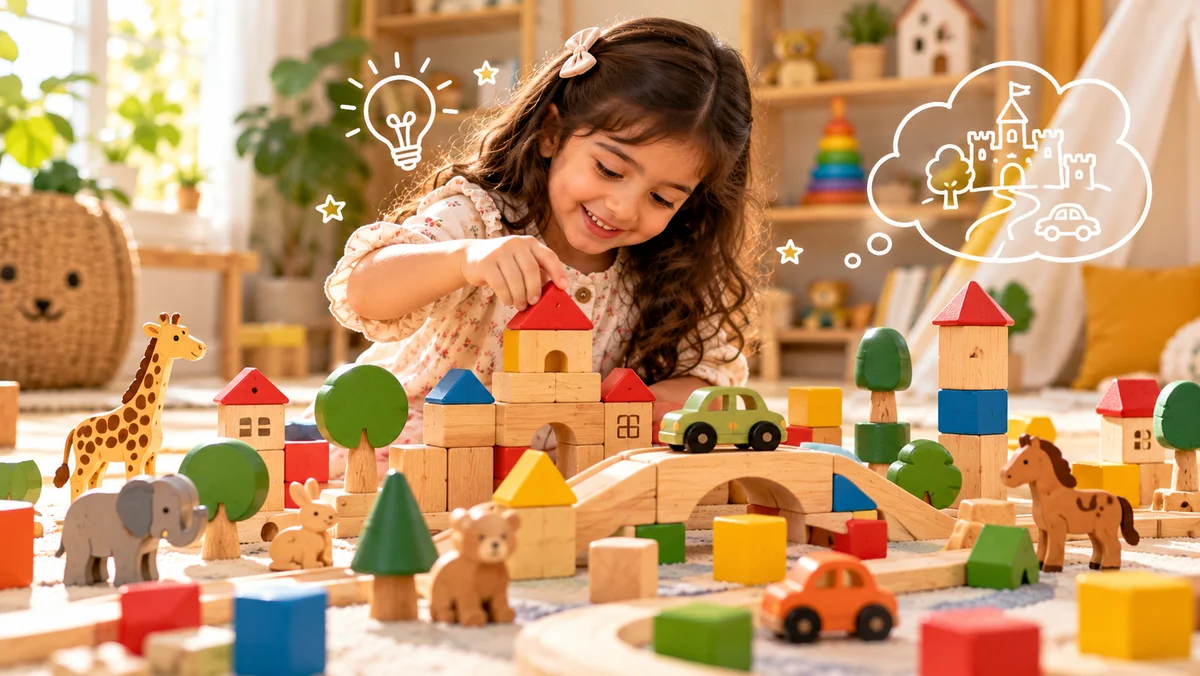
Open-ended toys are designed to encourage children to imagine, create, experiment and explore. A set of wooden blocks can become a house, a bridge, a tower or an entire imaginary city. The possibilities change every time a child plays.
At Toyly World, we believe toys should leave room for imagination. Here's why open-ended play can be so valuable for growing minds.
1. Open-Ended Toys Encourage Imagination
An open-ended toy doesn't have just one purpose.
A wooden block can become almost anything a child imagines. A toy vehicle can become part of an adventure, while animal figures can become characters in a story.
Because children decide how to use the toy, they get opportunities to create their own ideas and imaginary worlds.
2. They Encourage Creativity
Creativity grows when children are given the freedom to make choices.
Instead of following one fixed set of instructions, children can decide what they want to build or create.
They might build a:
Tower
House
Bridge
Garage
Castle
Road
Animal habitat
There is no single correct answer, which gives children more freedom to experiment.
3. They Support Problem-Solving
Open-ended play naturally creates small challenges.
A tower might fall.
A bridge might not support a toy car.
Two pieces might not fit together.
Instead of immediately providing the solution, children can experiment with different possibilities.
They may change the position of a block, use a different piece or redesign their creation.
This process encourages problem-solving through hands-on experience.
4. Children Learn Through Experimentation
Children are naturally curious about what happens when they change something.
What happens if I make the base wider?
What happens if I use a bigger block?
Can this vehicle fit under the bridge?
Can I make the tower taller?
These simple experiments help children understand cause and effect while they play.
5. Open-Ended Toys Grow With the Child
A good open-ended toy can be used in different ways as a child's skills develop.
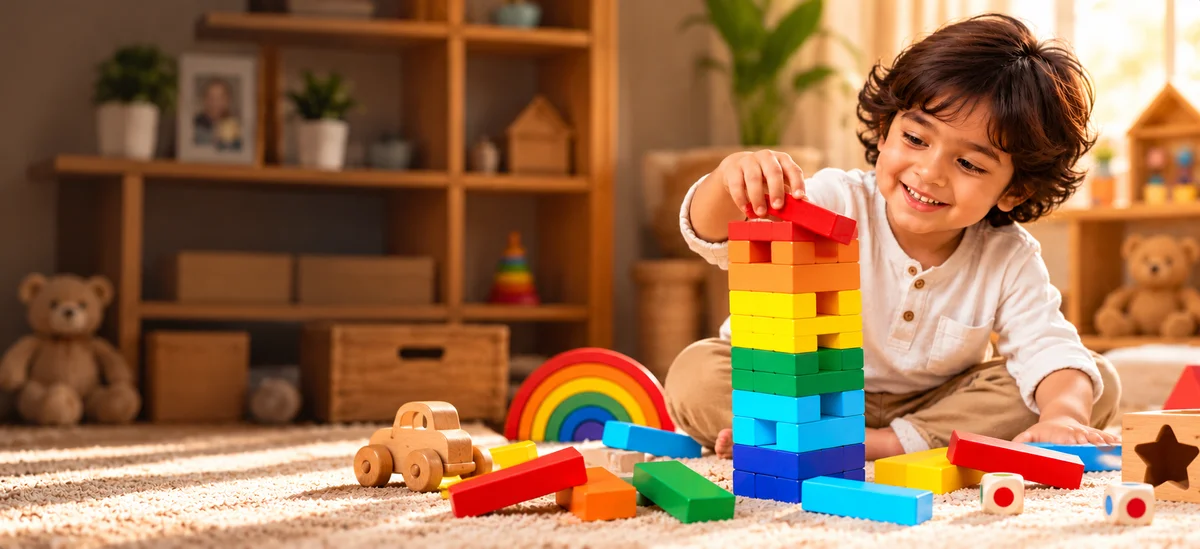
A younger child might simply stack blocks.
Later, the same blocks might become a house or bridge.
As imagination and building skills develop, the child might create an entire town.
The toy stays useful because the child's way of playing can change over time.
6. They Encourage Independent Play
Open-ended toys give children opportunities to decide what they want to do.
They can choose:
What to build
Which pieces to use
Where to place them
How to change their creation
When to start something new
This gives children opportunities to explore their own ideas and make decisions during play.
7. They Can Support Social Play
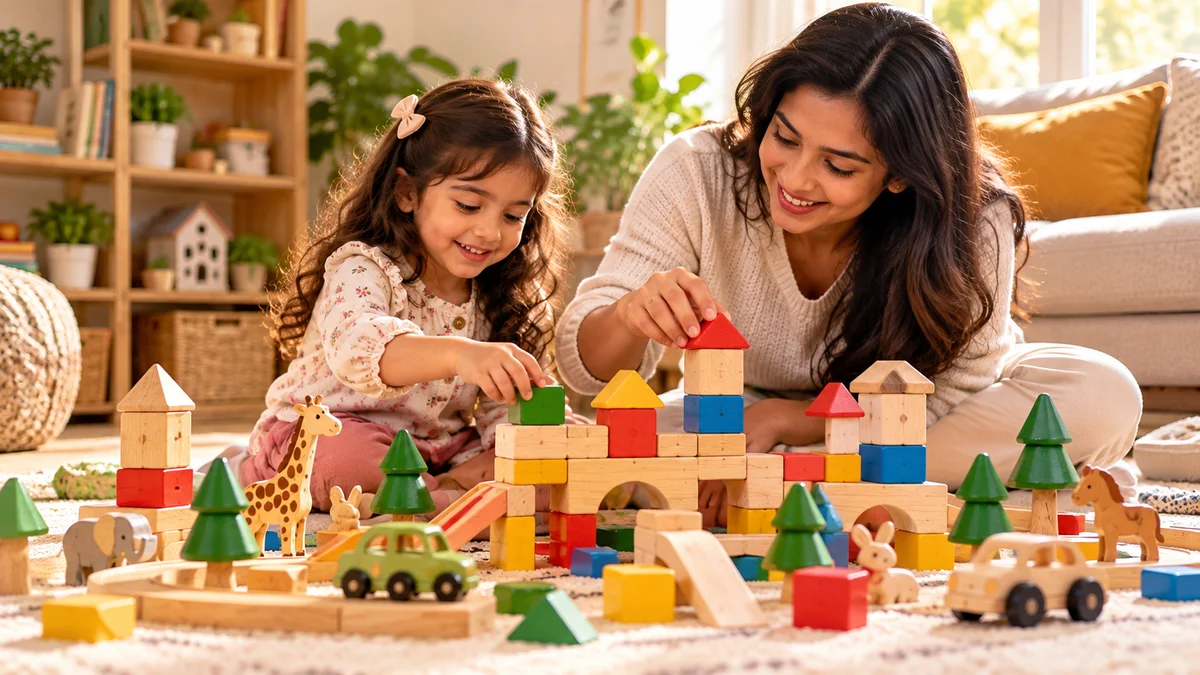
Open-ended toys can also be excellent for playing with siblings, parents and friends.
Two children might work together to build a large structure.
One child can build the road while another creates the buildings.
They can create stories, share pieces and decide together what happens next.
This type of play can encourage communication, cooperation and turn-taking.
8. Simple Toys Can Create Complex Play
A toy doesn't need lights, sounds or complicated features to keep children engaged.
A few wooden blocks can provide hours of possibilities.
For example:
Blocks → Buildings → City → Story → Adventure
The child keeps adding ideas to the original play experience.
This is one of the strengths of simple, open-ended toys.
9. Open-Ended Play Encourages Storytelling
Children often create stories around what they build.
A wooden car may be traveling to a new city.
A block castle may need to be protected.
Animal figures may be searching for a new home.
These stories allow children to combine physical play with imagination and communication.
10. Parents Can Encourage Without Taking Over
Parents don't need to direct every part of play.
Instead, try asking questions that allow children to lead.
For example:
"What are you building?"
"What should we add next?"
"How can we make the bridge stronger?"
"Who lives in your house?"
These questions encourage children to explain their ideas while keeping control of the play in their hands.
How to Choose Open-Ended Toys
When choosing toys for open-ended play, look for products that offer multiple ways to interact and create.
Good options can include:
Wooden blocks
Stacking toys
Building sets
Wooden vehicles
Animal figures
Shape and sorting toys
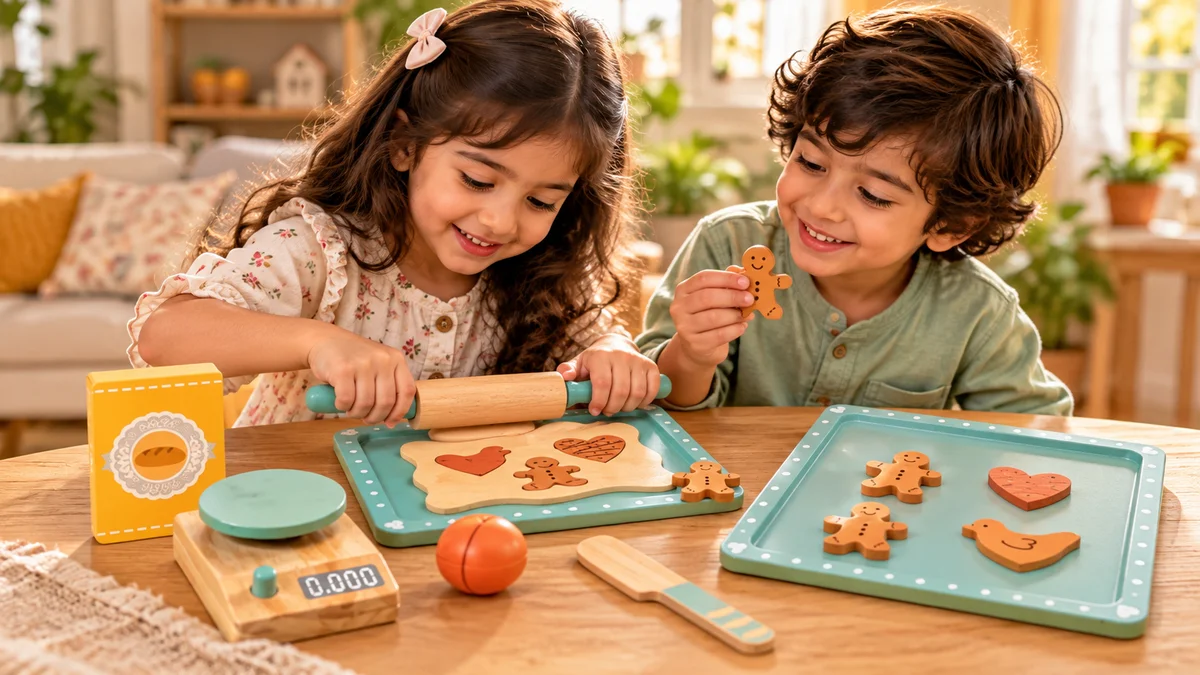
Pretend-play accessories
Choose toys that are appropriate for the child's age and made with child-friendly materials and construction.
Final Thoughts
Open-ended toys give children something extremely valuable: the freedom to decide what play becomes.
They can build, rebuild, imagine, experiment and create without needing one fixed outcome.
At Toyly World, we believe the best toys don't limit a child's imagination. They give it somewhere to begin.
One simple toy can become a hundred different adventures.
Explore Toyly World
Discover thoughtfully designed toys that encourage children to imagine, build, explore and learn through play.
Shop Toyly World →