How Stacking Toys Help Develop Problem-Solving Skills
How Stacking Toys Help Develop Problem-Solving Skills
Category: Learning Through Play
Author: Toyly World
Reading Time: 5 min
Stacking toys may look simple, but they can give children many opportunities to think, experiment and solve problems.
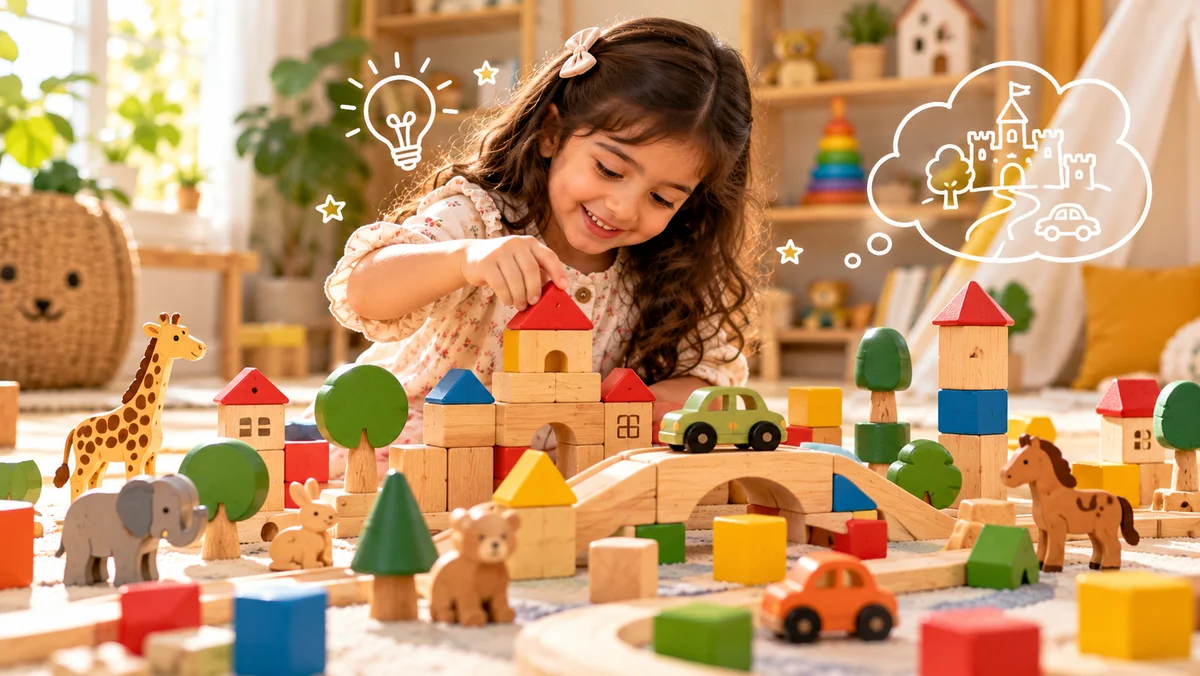
When a child tries to balance blocks, build a taller tower or arrange pieces in a particular way, they are constantly making small decisions. What should go first? Which piece should go on top? Why did the tower fall? How can I make it stronger?
These simple moments turn playtime into an opportunity for hands-on learning.
At Toyly World, we believe that children learn best when they are free to explore, experiment and discover. Here's how stacking toys can help develop problem-solving skills through play.
1. Children Learn Through Trial and Error
Stacking rarely works perfectly on the first attempt.
A child may build a tower that falls over, change the arrangement and try again. Each attempt gives them new information about what works and what doesn't.
They begin to understand that making a mistake is part of the process.
Instead of simply being given the answer, children get the opportunity to discover the solution themselves.
2. Stacking Encourages Logical Thinking
Building a stable structure requires children to think about the order and position of different pieces.
They may discover that:
Larger pieces work better at the bottom.
Smaller pieces can be placed higher.
A balanced structure is less likely to fall.
The position of each piece affects the whole tower.
These observations introduce basic logical thinking through an activity that feels like play.
3. It Teaches Children About Balance
Balance is one of the most interesting parts of stacking play.
When children place one piece on top of another, they can immediately see the result.
If the structure stays upright, they can continue building.
If it falls, they can change the position of the pieces and try again.
This gives children a simple physical way to understand cause and effect.
4. Stacking Toys Encourage Planning
As children become more comfortable with stacking, they may start planning before they begin.
They might think:
"I'll use the big blocks first."
"I'll put the heavy piece at the bottom."
"I'll make the base wider."
This type of thinking encourages children to consider what they want to achieve and decide how they can get there.
5. They Develop Spatial Awareness
Stacking involves understanding how objects relate to one another in space.
Children learn to notice:
Height
Width
Size
Position
Distance
Shape
For example, a child may notice that placing a long block across two smaller blocks creates a bridge.
Through repeated play, children can develop a better understanding of how objects fit and work together.
6. Stacking Encourages Persistence
Sometimes the tower falls again and again.
Instead of giving up, children can try a different approach.
They might change the base, use different pieces or build more slowly.
This creates opportunities to practice persistence and patience.
The goal isn't simply to build the tallest tower. The process of trying, adjusting and trying again is valuable in itself.
7. Children Learn to Make Decisions
Every stacking activity involves choices.
Which piece should I use?
Where should I put it?
Should I make the tower taller or wider?
What should I change?
Giving children the freedom to make these decisions encourages independent thinking.
There may be several ways to solve the same challenge, allowing children to explore different solutions.
8. Stacking Can Introduce Early Mathematics
Stacking toys can also make basic mathematical ideas easier to explore.
Children can count how many pieces they use, compare sizes and measure how tall their tower becomes.
You can turn playtime into simple challenges:
"How many blocks can you stack?"
"Which tower is taller?"
"Can you make two towers the same height?"
"Which block is the biggest?"
These activities introduce numbers, comparison, measurement and patterns in a natural way.
9. Parents Can Turn Stacking Into Simple Challenges
You don't need complicated instructions to make stacking more engaging.
Try giving your child small challenges such as:
Build the Tallest Tower
Give your child several blocks and see how tall they can make their tower.
Build a Stable Tower
Ask them to create a tower that doesn't fall when they add more pieces.
Copy the Structure
Build a simple structure and ask your child to make something similar.
Build With Colors
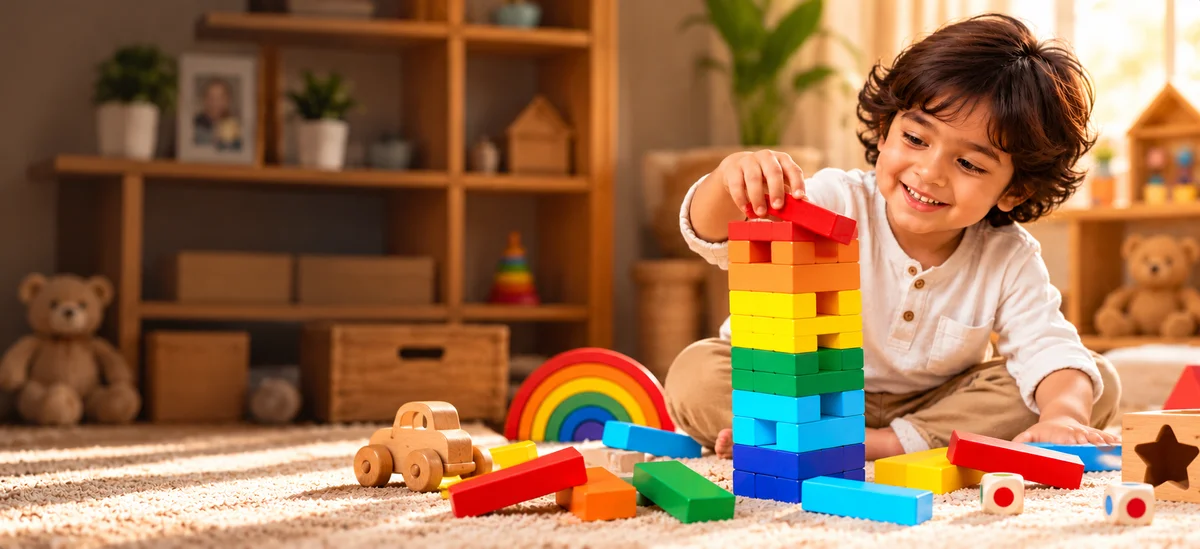
Ask them to create a tower using a particular color pattern.
Build Something New
Give them a selection of blocks and ask what they can create.
These challenges encourage children to think while keeping the activity fun.
10. Open-Ended Play Has No Single Right Answer
One of the best things about stacking toys is that children don't always have to follow one fixed method.
A stack of blocks can become:
A tower
A bridge
A house
A wall
A garage
A castle
A completely new creation
This freedom encourages children to experiment and come up with their own solutions.
Choosing the Right Stacking Toy
When choosing a stacking toy, consider options that give children opportunities to build, rearrange and experiment.
Look for toys that:
Match the child's age and abilities
Are comfortable for small hands to handle
Offer different ways to play
Encourage building and experimentation
Use child-friendly materials and construction
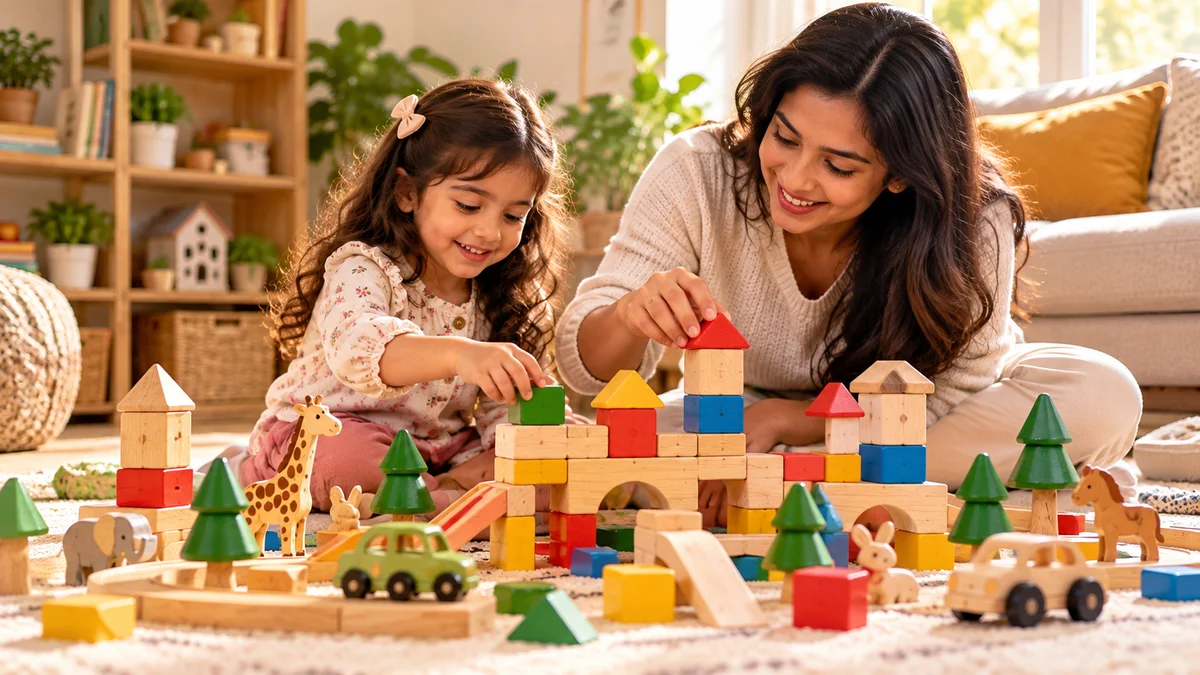
Allow children to play independently or with others
A simple stacking toy can provide many different play possibilities as children grow and develop new skills.
Final Thoughts
Stacking toys are more than just colorful pieces that children place on top of one another.
They give children opportunities to practice problem-solving, logical thinking, planning, balance, spatial awareness, decision-making and persistence through hands-on play.
Every fallen tower can become a new challenge. Every successful structure can encourage another idea.
At Toyly World, we believe that meaningful learning can start with something as simple as a child picking up a block and asking:
"What can I build?"
And that's where the fun begins.
Explore Toyly World
Discover thoughtfully designed toys that encourage children to build, explore, create and learn through play.
Shop Toyly World →