How Pretend Play Helps Children Build Creativity and Confidence
How Pretend Play Helps Children Build Creativity and Confidence
Category: Learning Through Play
Author: Toyly World
Reading Time: 5 min
Pretend play is one of the simplest ways children can turn ordinary toys into extraordinary adventures.
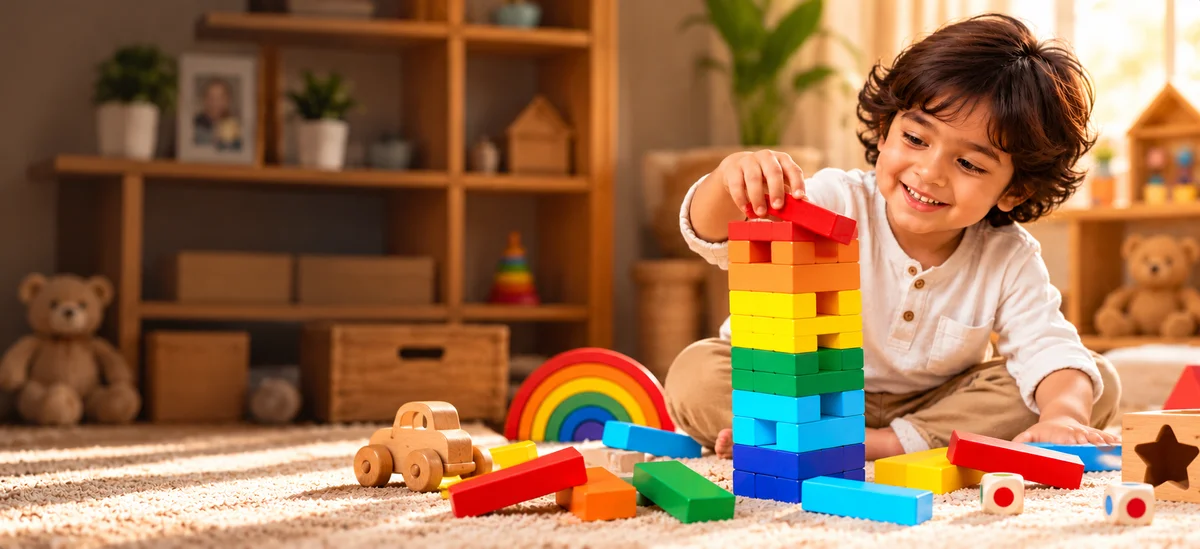
A wooden vehicle can become a race car. Animal toys can become characters in a jungle story. A few blocks can become a house, castle or city.
Children aren't just playing during these moments. They are creating stories, making decisions, communicating ideas and exploring the world through their imagination.
At Toyly World, we believe that imaginative play gives children the freedom to explore, create and learn in their own way.
1. Pretend Play Encourages Imagination
Pretend play gives children the freedom to create their own worlds.
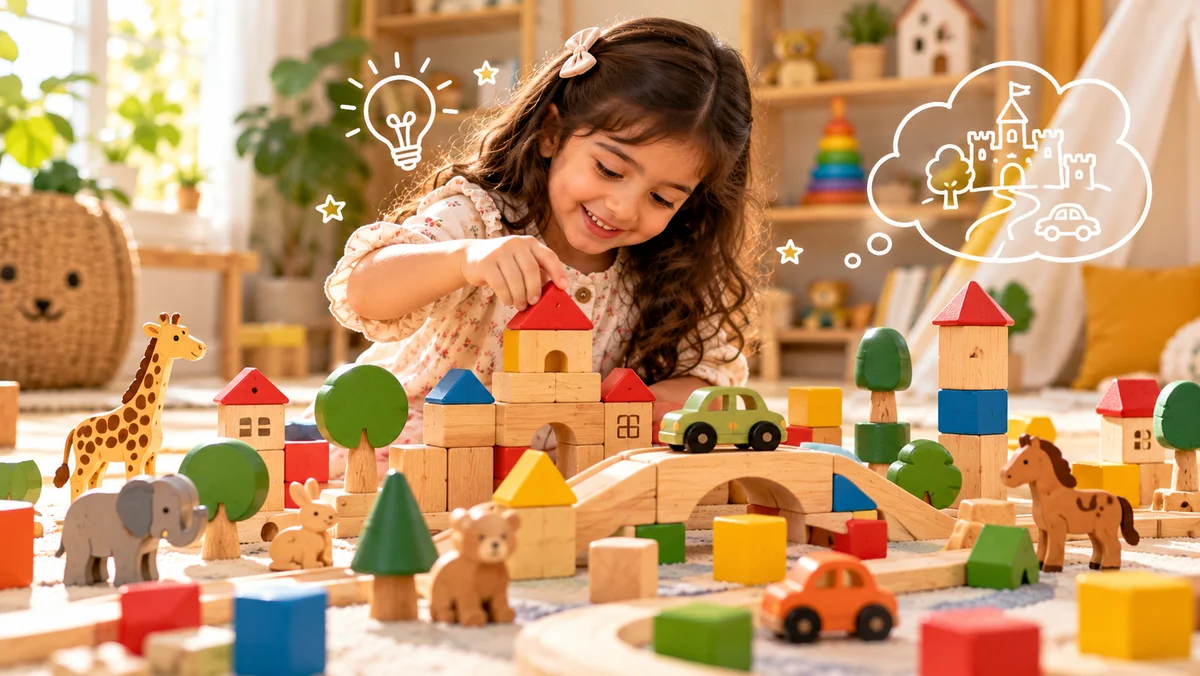
A toy doesn't have to be used in only one way. A wooden car can travel through an imaginary city, a toy animal can become a story character, and blocks can become almost anything.
Children decide what happens next, which encourages them to use their imagination.
2. It Helps Children Create Their Own Stories
Storytelling naturally becomes part of pretend play.
A child might create a story about a wooden train going on an adventure or animals searching for a new home.
They can decide:
Who are the characters?
Where are they going?
What happens next?
What problem do they need to solve?
How does the story end?
Creating these stories gives children opportunities to express their ideas.
3. Pretend Play Supports Communication
When children play together, they need to communicate.
They might say:
"You be the driver."
"Let's build a house here."
"The animals need to go to the forest."
These simple conversations encourage children to express themselves, listen to others and develop their vocabulary.
4. It Encourages Problem-Solving
Pretend stories don't always go according to plan.
A bridge might fall down.
A toy car might get stuck.
A character might need help.
Children can decide what to do next.
Instead of being given a solution, they can invent one themselves. This makes pretend play an enjoyable way to practice creative problem-solving.
5. Children Practice Making Decisions
Pretend play gives children control over their imaginary world.
They decide which toys to use, where the story takes place and what happens next.
For example:
"Should the car go over the bridge or through the tunnel?"
"Should we build a small house or a big house?"
These choices encourage children to think independently.
6. Pretend Play Can Build Confidence
When children create their own games and stories, they get opportunities to make decisions and express their ideas.
There isn't always a single correct answer.
Their story can be different.
Their building can look different.
Their imaginary world can be completely their own.
This freedom can make children more comfortable sharing their ideas and taking the lead during play.
7. It Encourages Social Play
Pretend play becomes even more interesting when children play together.
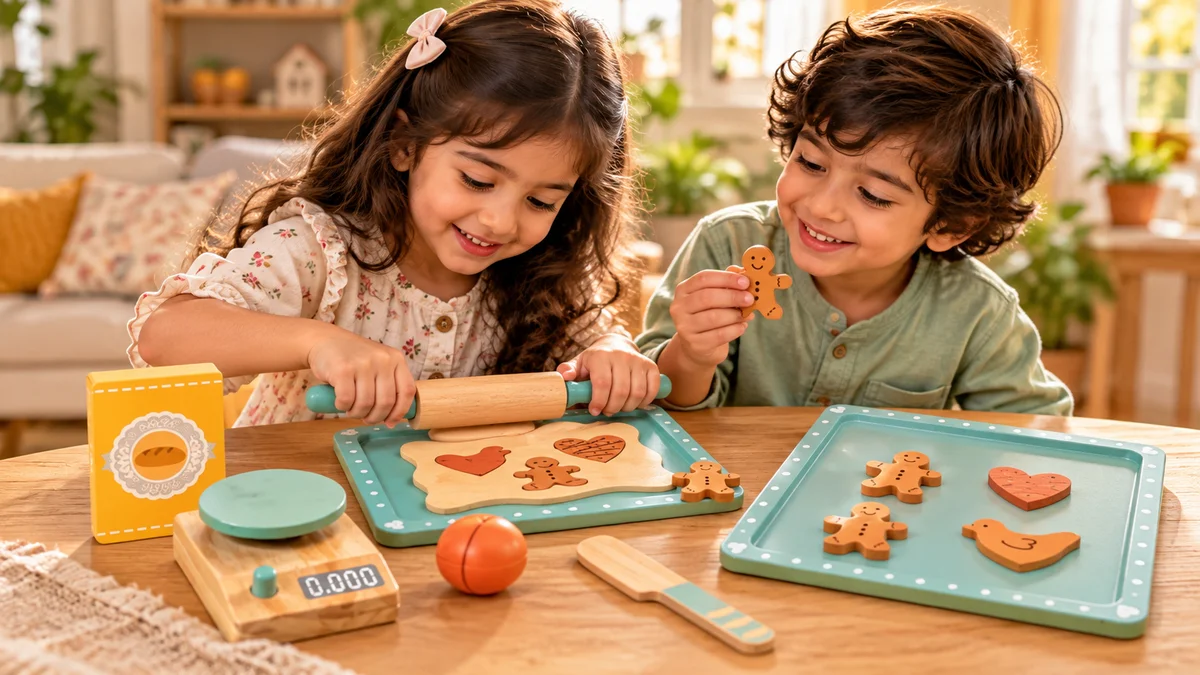
Two children can create a shared story and decide what each person will do.
They may practice:
Taking turns
Sharing toys
Listening
Cooperating
Negotiating
Communicating
These interactions can make play both social and creative.
8. Everyday Objects Can Become Part of the Story
Pretend play doesn't require a large collection of specialized toys.
A cardboard box can become a house.
A blanket can become a tent.
Wooden blocks can become buildings.
A toy vehicle can become part of an adventure.
This is one of the reasons imaginative play can be so flexible. Children can transform simple objects into whatever their imagination needs.
9. Parents Can Join Without Taking Over
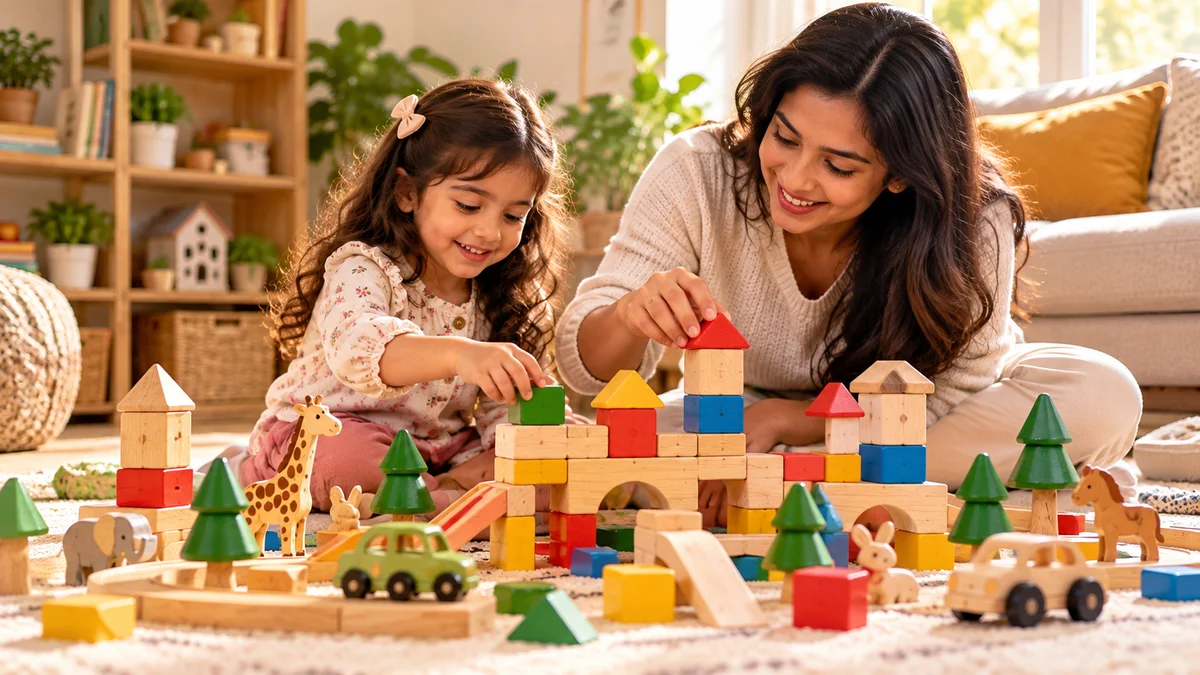
Parents can make pretend play even more engaging by joining the story.
Instead of controlling the game, try asking open-ended questions:
"Where are we going?"
"What should we build?"
"Who lives here?"
"What happens next?"
These questions allow children to lead the story while giving them opportunities to explain their ideas.
10. Open-Ended Toys Are Great for Pretend Play
Toys with many possible uses can give children more freedom to create.
Wooden blocks, vehicles, animal figures, stacking pieces and other simple toys can become part of different stories every time a child plays.
One day the blocks might become a castle.
The next day they might become a train station.
The possibilities can change with the child's imagination.
How to Encourage Pretend Play at Home
Creating a space for imaginative play can be simple.
Try keeping a small collection of toys together where children can easily reach them.
You can include:
Wooden blocks
Toy vehicles
Animal figures
Puzzles
Building pieces
Pretend-play accessories
Books for story inspiration
Then give children time and freedom to decide what they want to create.
You don't need to provide a detailed activity every time. Sometimes the best ideas come when children are given space to invent their own games.
Final Thoughts
Pretend play gives children a chance to create, communicate, make decisions and solve problems while having fun.
It turns simple toys into stories and everyday spaces into imaginary worlds.
At Toyly World, we believe children should have toys that leave room for imagination.
Because a toy doesn't need to tell a child exactly how to play.
Sometimes, the best toy simply asks:
"What will you imagine today?"
Explore Toyly World
Discover thoughtfully designed toys that encourage children to imagine, create, explore and learn through play.
Shop Toyly World →